

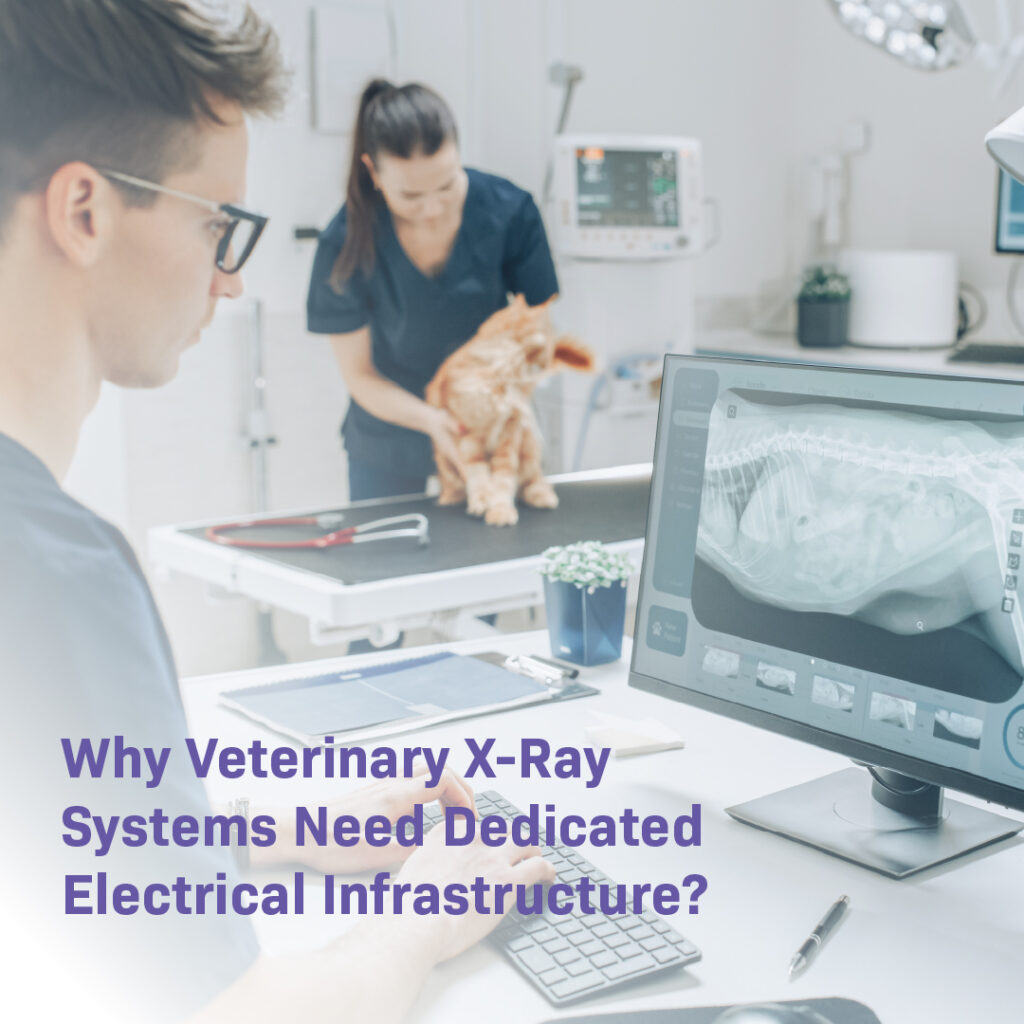
Every clear diagnosis begins long before the image appears on the screen. In veterinary practices, reliable X-ray imaging depends not only on advanced technology, but on the electrical foundation supporting it. Because veterinary X-ray systems draw intense bursts of power in milliseconds, a dedicated electrical infrastructure isn’t just a technical recommendation, it’s essential for protecting image quality, equipment reliability, and the safety of your team and patients.
The Power Demands of Veterinary X-Ray Equipment
During an exposure, an X-ray system can draw instantaneous current surges exceeding 100–200 amps. When the system shares a circuit with other equipment, this sudden demand can cause voltage drops that lead to underexposed images, artifacts, and inconsistent diagnostic results. Over time, voltage instability forces the generator to work harder, shortening the lifespan of the X-ray tube and internal components.
Protecting Image Quality and Clinic Equipment
Modern veterinary X-ray systems use high-frequency generators that can generate electromagnetic interference (EMI). On shared electrical circuits, this interference may affect computers, monitors, digital detectors, and other sensitive devices—causing screen flicker, data errors, or system instability. Dedicated electrical lines and proper grounding isolate this noise and protect both imaging performance and clinic electronics.
Reducing Electrical Risks and Downtime
X-ray generators are non-linear electrical loads that introduce harmonics into shared circuits. These harmonics can cause unexpected breaker trips, wiring overheating, and long-term infrastructure stress. Additionally, transient voltage spikes and ground loops can introduce noise into digital images, appearing as lines or distortion that compromise diagnostic confidence.
Best Practices for Veterinary X-Ray Installations
Veterinary clinics should follow these essential electrical guidelines:
- Use a dedicated circuit or sub-panel for X-ray rooms
- Ensure proper grounding and electrical isolation
- Protect workstations and detectors with an online UPS
- Avoid operating other high-load devices during imaging
Monitor system error logs for voltage warnings
A Strong Foundation for Better Diagnostics
Proper electrical infrastructure is the foundation of reliable veterinary imaging. Dedicated power ensures consistent image quality, protects valuable equipment, and reduces downtime, allowing veterinary teams to focus on what matters most: accurate diagnosis and quality patient care.

