Veterinary medicine is changing faster than ever. Rising caseloads, increasing client expectations, and growing competition from specialty referral centers are pushing practices to rethink what they can offer in-house.
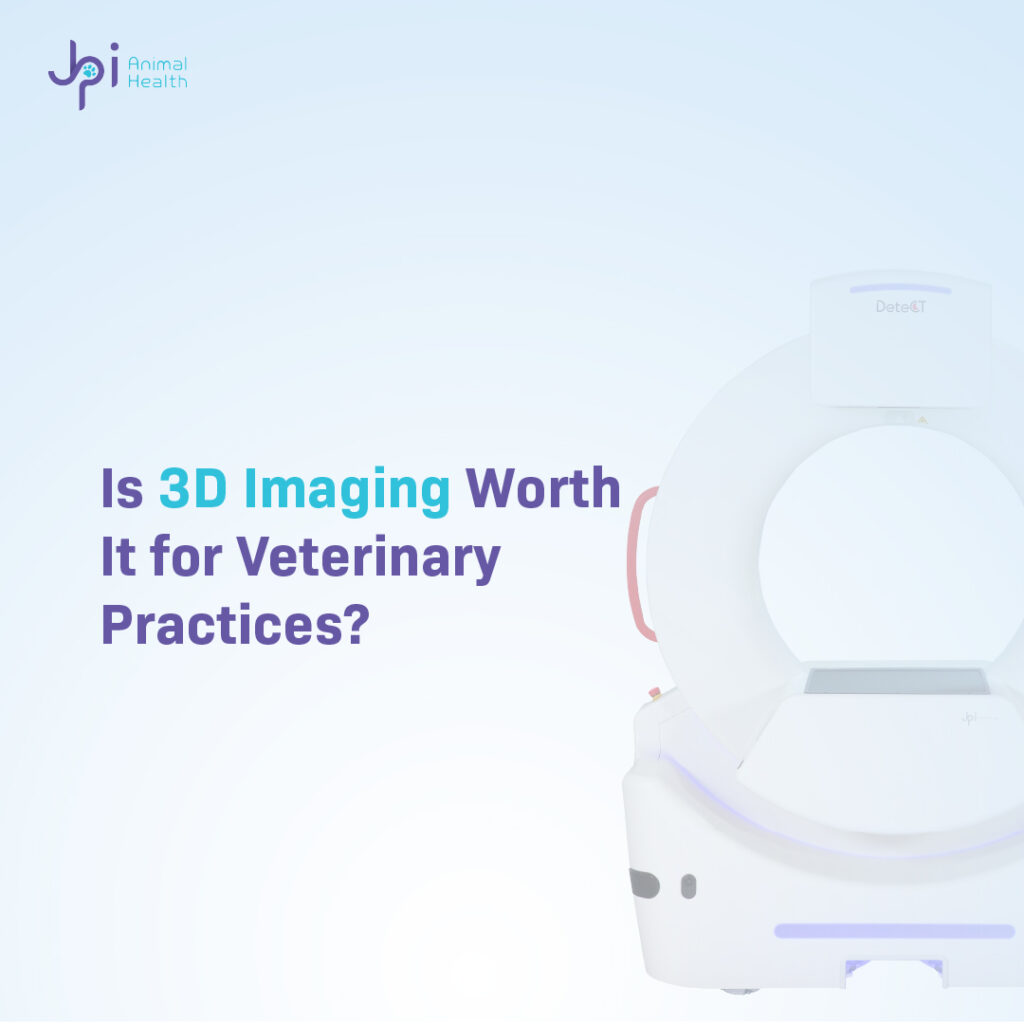
For many clinics and specialty hospitals, one question is coming up more often: Is investing in 3D imaging worth it?
The answer depends on your practice’s goals, caseload, and growth strategy. While 3D imaging requires a meaningful investment than traditional radiography, its value extends far beyond the equipment itself. Improved diagnostic confidence, expanded service offerings, enhanced client communication, and new revenue opportunities can make 3D imaging the right practice.
Here’s what 3D imaging offers and whether it makes financial and clinical sense for your facility.
What Is 3D Imaging?
Unlike traditional X-rays, which produce a two-dimensional image, 3D imaging creates detailed cross-sectional views of anatomical structures. This allows veterinarians to evaluate bones, joints, teeth, airways, and other areas from multiple angles without the superimposition often seen in standard radiographs.
Technologies such as Cone Beam CT (CBCT) have made advanced imaging more accessible to veterinary practices by providing high-resolution 3D images in a compact footprint — without the infrastructure requirements or cost of traditional CT systems.
Improved Diagnostic Confidence
One of the biggest advantages of 3D imaging is the ability to see more. In traditional radiographs, overlapping structures can sometimes make diagnosis challenging. Small fractures, dental lesions, joint abnormalities, and complex anatomical conditions may be difficult to fully evaluate.
With 3D imaging, veterinarians gain a clearer view of the area of interest, helping them:
- Detect conditions earlier
- Improve diagnostic accuracy
- Reduce uncertainty
- Make more informed treatment decisions
For complex cases, this additional information can support better clinical decisions and improve the overall care experience for both patient and owner.
Expanding Clinical Capabilities
Many practices invest in 3D imaging not only to improve diagnostics but also to expand the services they can provide in-house.
3D imaging can be particularly valuable for:
- Dentistry
- Orthopedics
- Oncology
- Neurology
- Exotic animal medicine
- Surgical planning
Instead of referring certain cases elsewhere, practices may be able to diagnose and manage more patients internally, creating a better experience for clients while generating additional revenue.
Enhancing Client Communication
Pet owners want to understand what is happening with their animals. Showing a client a traditional X-ray often requires significant explanation. A 3D image, however, can provide a much clearer visual representation of the problem.
When owners can easily see a fracture, dental lesion, or anatomical abnormality, conversations about treatment recommendations often become more productive. This can improve client understanding, confidence, and acceptance of treatment plans.
The Financial Perspective
The question many practice owners ask is whether the return justifies the investment. While every clinic is different, several factors contribute to the financial value of 3D imaging:
Increased Revenue Opportunities
Practices can offer advanced diagnostic services that may otherwise require referral, creating new sources of revenue.
Improved Case Retention
Keeping more complex cases in-house helps retain patients and strengthen client relationships.
Greater Practice Differentiation
Advanced technology can help practices stand out in competitive markets and attract referral opportunities.
Better Workflow Efficiency
Faster and more confident diagnoses can help streamline clinical decision-making and treatment planning.
When viewed as a strategic growth tool rather than simply an equipment purchase, the financial benefits often become easier to understand.
Is 3D Imaging Right for Every Practice?
Not necessarily. For practices with limited imaging needs or low volumes of complex cases, traditional digital radiography may continue to meet most diagnostic requirements.
However, for clinics looking to expand services, reduce referrals, improve diagnostic capabilities, and position themselves for long-term growth, 3D imaging can be a valuable investment.
The key is evaluating not only today’s needs but also where the practice wants to be in the next five to ten years.
The Bottom Line
3D imaging is more than an advanced diagnostic tool, it’s an opportunity to elevate the level of care a veterinary practice can provide.
By improving diagnostic confidence, supporting advanced procedures, enhancing client communication, and creating new revenue opportunities, 3D imaging can deliver significant value for the right practice.
The question isn’t simply whether 3D imaging costs more than traditional radiography. The better question is whether the clinical and business advantages it provides can help your practice grow, differentiate itself, and deliver better outcomes for patients.
For many veterinary professionals, the answer is increasingly becoming yes.
Discover the Potential of 3D Imaging
At JPI Animal Health, we help veterinary practices unlock new diagnostic capabilities with advanced imaging solutions integrated and supported specifically for animal healthcare.
Ready to explore what 3D imaging could mean for your practice? Talk to a JPI Specialist